
Applications and Circuit Design Using the onsemi BSS138LT1 N-Channel MOSFET
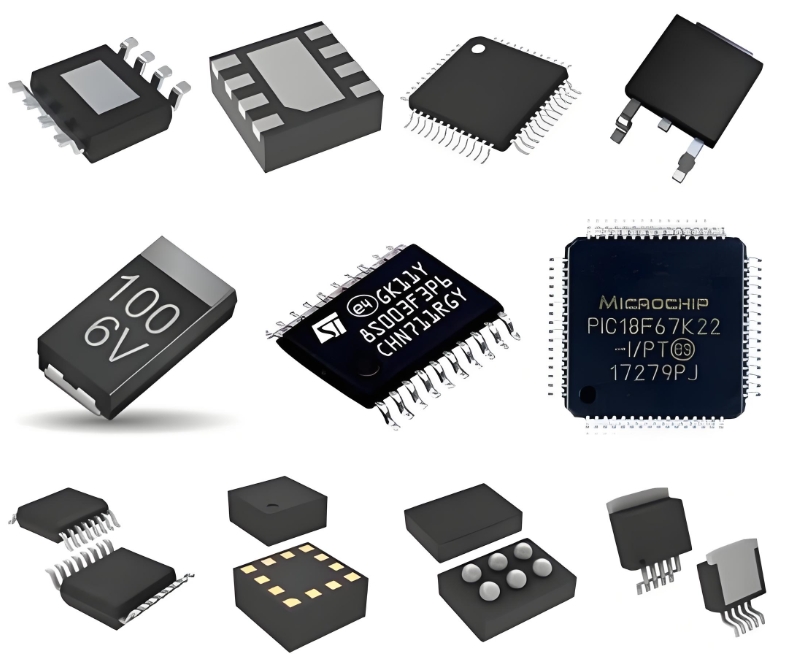
The onsemi BSS138LT1 is a widely adopted N-Channel enhancement mode MOSFET housed in a compact SOT-23 package. Its combination of low threshold voltage, low on-resistance, and high-speed switching performance makes it an excellent choice for a vast array of low-voltage, low-power applications. This article explores its key characteristics, common applications, and fundamental circuit design principles.
A primary strength of the BSS138LT1 lies in its low threshold voltage (Vgs(th)), typically around 1.3V. This feature is critical for direct interfacing with low-voltage microcontrollers and logic circuits (e.g., 3.3V or even 1.8V systems), enabling efficient control without requiring additional level-shifting circuitry. Furthermore, its low drain-source on-resistance (RDS(on)) minimizes conduction losses when the switch is fully turned on, enhancing overall system efficiency and reducing heat generation.
Core Applications:
1. Load Switching: The most straightforward application is as a solid-state switch to control power to a load, such as an LED, motor, or sensor. A microcontroller GPIO pin can effortlessly turn the load on or off by driving the MOSFET's gate.
2. Logic Level Shifting: The BSS138LT1 is frequently employed to construct simple, bidirectional level shifters. These circuits are essential for enabling communication between devices operating at different voltage domains (e.g., a 3.3V microcontroller talking to a 5V peripheral).
3. Signal Switching and Multiplexing: Its fast switching speed makes it suitable for routing analog or digital signals in multiplexing applications, such as in data acquisition systems or audio signal routing.
Essential Circuit Design Considerations:
When designing with the BSS138LT1, several factors are paramount for stable and reliable operation.
Gate Driving: While the threshold voltage is low, driving the gate with a sufficiently high voltage (e.g., 3.3V or 5V) is necessary to ensure the MOSFET enters its full low-resistance (saturation) region. A gate resistor (e.g., 10Ω - 100Ω) is often used to dampen ringing caused by parasitic inductance and the gate capacitance.
Protection Diodes: In circuits with inductive loads (like relays or motors), a flyback diode must be placed across the load to protect the MOSFET from voltage spikes generated when the current is suddenly interrupted.
ESD and Overvoltage Protection: The BSS138LT1 is a sensitive semiconductor. Transient Voltage Suppression (TVS) diodes or zener diodes on the gate and drain can be crucial for protecting it from electrostatic discharge (ESD) and voltage transients on the power rail.
ICGOODFIND: The onsemi BSS138LT1 stands out as a versatile and highly efficient solution for modern low-power electronic design. Its optimal blend of a low threshold voltage and minimal on-resistance makes it an indispensable component for designers working on space-constrained, battery-operated devices and systems requiring robust logic interface capabilities.
Keywords:
Low Threshold Voltage
Logic Level Translation
Load Switching
Circuit Protection
SOT-23 Package

