
**ADF7024BCPZ: A Comprehensive Technical Overview and Application Guide**
The **ADF7024BCPZ** from Analog Devices is a high-performance, low-power, **fully integrated transceiver** IC designed for operation in the **license-free ISM (Industrial, Scientific, and Medical) bands** at 433 MHz, 868 MHz, and 915 MHz. This device combines an RF front-end with a versatile modem and an on-chip microcontroller, making it an ideal solution for a wide array of short-range wireless applications. Its combination of high integration and flexible programmability allows designers to implement robust wireless links with minimal external components.
**Architectural Overview and Key Features**
At its core, the ADF7024BCPZ integrates a complete RF transceiver, a **programmable baseband processor**, and a power management unit within a single 6 mm × 6 mm 40-lead LFCSP package. The receiver path features a low-noise amplifier (LNA) with outstanding sensitivity, often better than -120 dBm, followed by a complex mixer and a high-resolution sigma-delta ADC. The transmitter path incorporates a fractional-N PLL synthesizer and a power amplifier (PA) that can be programmed to deliver output power up to +13 dBm, providing excellent range and link budget control.
A defining characteristic of this transceiver is its **highly flexible data rate and modulation support**. It can be configured for a wide range of data rates from 0.05 kbps to 300 kbps, supporting various modulation schemes including 2FSK, 3FSK, 4FSK, GFSK, MSK, GMSK, and OOK/ASK. This flexibility allows it to be optimized for either long-range, low-data-rate applications (like metering) or higher-speed, shorter-range links.
The on-chip **ARM® Cortex™-M3 microcontroller** is a significant advantage. This powerful 32-bit processor handles all data packetization, preamble and sync word detection, CRC calculation, automatic acknowledgment, and even user application code execution. This offloads these intensive tasks from the main system host processor, simplifying system design and reducing overall power consumption.
**Application Implementation Guide**
Implementing the ADF7024BCPZ requires careful attention to several key areas:
1. **Hardware Design:** A proper RF layout is critical for performance. This includes using a continuous ground plane, implementing precise impedance matching for the RF input/output (typically 50 Ω), and effective decoupling of all power supply pins. The external crystal oscillator circuit must be designed according to the manufacturer's specifications for stable frequency generation.
2. **Firmware Configuration:** The device is controlled via an SPI interface. Developers must configure a suite of internal registers to set parameters such as frequency channel, output power level, data rate, modulation type, and the operating mode of the packet handler. Analog Devices provides a comprehensive software library and development tools to streamline this process.
3. **Antenna Selection:** The choice of antenna (e.g., whip, PCB trace, ceramic) significantly impacts system range and reliability. An appropriate matching network and a simple front-end filter (like a SAW filter) are recommended to enhance out-of-band rejection and meet regulatory standards.
4. **Power Management:** The ADF7024BCPZ excels in low-power design. Its power management unit supports multiple low-power states, including SLEEP and DEEP SLEEP modes, drawing only microamps of current. This makes it exceptionally well-suited for **battery-powered and energy-harvesting applications** that require years of operation on a single battery.
**Typical Use Cases**
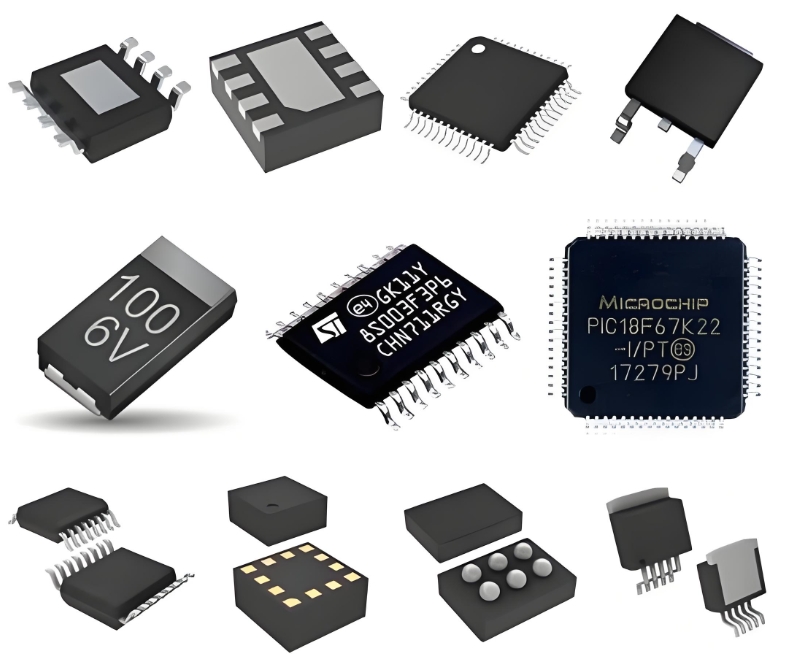
Its robust feature set makes the ADF7024BCPZ a preferred choice for:
* **Advanced Metering Infrastructure (AMI)** and smart metering
* **Home and Building Automation** (e.g., smart thermostats, security sensors)
* **Industrial Monitoring and Control** (PLC, sensor networks)
* **Asset Tracking** and wireless alarm systems
* **Low-Power Wide-Area Networks (LPWAN)** for M2M communication
**ICGOOODFIND**
The ADF7024BCPZ stands out as a remarkably versatile and highly integrated transceiver solution. Its blend of **exceptional RF performance**, a powerful integrated microcontroller, and ultra-low-power operation addresses the core challenges of modern wireless system design. By minimizing the external component count and simplifying the development process, it significantly reduces time-to-market and total system cost for a vast spectrum of ISM band applications, solidifying its position as a cornerstone component in the IoT landscape.
**Keywords:**
1. **Transceiver**
2. **ISM Band**
3. **Low-Power**
4. **Modulation**
5. **Microcontroller**

